




A shower column integrates essential shower components into a coordinated system, often featuring an overhead shower, a handheld shower, adjustable controls, and an integrated or compatible diverter. This guide explains how shower columns work, what features matter most, how to choose suitable materials and configurations, and how to avoid common installation and maintenance problems. It also explores the considerations that residential projects, hotels, and bathroom product buyers should evaluate before making a purchase.
1. What Is a Shower Column?
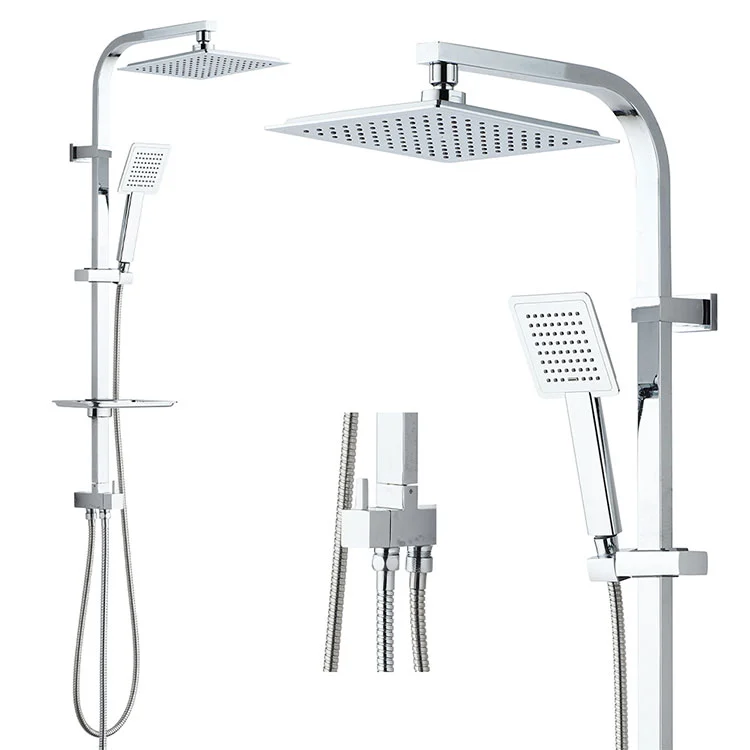
A shower column is a vertical shower assembly designed to organize water outlets and controls within a single installation area. Depending on the model, it may include an overhead showerhead, a handheld shower, a vertical rail, a hose, a mixer, and a diverter for switching between water outlets.
Unlike a bathroom setup that uses separately installed shower components, a shower column brings compatible elements together into a coordinated system. This can create a more organized appearance while making everyday showering more convenient.
Shower columns are available in different sizes, designs, and functional configurations. Some prioritize simple operation and affordability, while others feature large rain showerheads, thermostatic temperature controls, multiple spray patterns, or concealed plumbing connections.
Who Can Benefit from a Shower Column?
- Homeowners: Upgrade a bathroom without necessarily redesigning the entire space.
- Bathroom designers: Coordinate shower hardware with tiles, basins, faucets, and other fixtures.
- Hotels and serviced apartments: Select standardized shower systems for guest bathrooms and renovation projects.
- Property developers: Compare product specifications, appearance, maintenance needs, and procurement requirements across multiple units.
- Distributors and importers: Source products with suitable configurations, finishes, packaging, and market-specific compliance.
2. How Does a Shower Column Work?
A shower column directs water from the plumbing supply to one or more shower outlets. The precise arrangement depends on whether the product uses an exposed mixer, a concealed valve, a thermostatic control, or another compatible water-control system.
Main Components and Their Functions
- Overhead showerhead: Distributes water from above to create a broad showering experience. The actual coverage depends on the head diameter, nozzle arrangement, and water pressure.
- Handheld shower: Provides targeted rinsing and makes it easier to clean the shower enclosure, wash hair, or assist children and people with limited mobility.
- Vertical rail or column: Supports the shower assembly and may allow the handheld shower holder to be adjusted in height.
- Mixer or control valve: Regulates water temperature and flow, depending on the product design.
- Diverter: Directs water between compatible outlets, such as the overhead and handheld showers.
- Flexible hose and connections: Carry water to the handheld shower and connect the relevant components.
Understanding Water Pressure and Flow
A shower column cannot automatically compensate for an inadequate water supply. A large overhead showerhead may require a higher flow rate than a compact handheld shower, and simultaneous operation of multiple outlets can increase demand on the plumbing system.
For a consistent showering experience, check the manufacturer's recommended operating pressure, flow-rate specifications, and any restrictions associated with the selected mixer or valve. In buildings with low or fluctuating pressure, a model designed for the available supply may perform better than one with multiple high-flow outlets.
Water-saving showerheads and flow regulators may reduce consumption while maintaining a comfortable spray. However, the perceived performance depends on the design of the nozzles, water pressure, and individual preferences.
3. What Are the Main Benefits of a Shower Column?
3.1 A More Organized Bathroom Layout
By grouping compatible shower components into one vertical assembly, a shower column can create a coordinated appearance. This is especially useful in contemporary bathrooms where clean lines and consistent finishes are important.
Exposed shower columns can also be a practical choice for selected renovations because they may reduce the need to open walls for new concealed plumbing. Suitability still depends on the existing connections, mounting arrangement, and the specific product.
3.2 Flexible Showering Options
The combination of overhead and handheld outlets gives users more control over their showering routine. The overhead shower can provide broad water coverage, while the handheld unit supports targeted rinsing and cleaning.
Models with adjustable brackets, multiple spray modes, or accessible controls can offer additional convenience for households with different needs.
3.3 Easier Routine Cleaning
Many showerheads use silicone nozzles that can be rubbed gently to help release mineral deposits. A well-designed assembly with accessible connections and a durable finish may also make routine cleaning easier.
However, maintenance requirements vary. Complex systems with additional outlets and controls may require more attention than simpler designs.
3.4 Design Consistency
Shower columns are available in finishes such as chrome, matte black, brushed nickel, and other decorative options. Coordinating the finish with bathroom accessories and faucets can create a more unified interior.
3.5 Potential Value for Renovation Projects
A suitable shower column may offer a convenient way to update the visible shower area without replacing every bathroom fixture. Buyers should still compare the full installation cost, including any necessary plumbing changes, wall repairs, accessories, and professional labor.
4. What Types of Shower Columns Are Available?
There is no single configuration suitable for every bathroom. The right choice depends on the installation method, user expectations, plumbing conditions, and budget.
| Type | Main Characteristics | Suitable Applications | Key Consideration |
|---|---|---|---|
| Basic shower column | Simple vertical assembly with essential shower components | Guest bathrooms and budget-conscious renovations | Confirm included accessories and control compatibility. |
| Rain shower column | Features a larger overhead showerhead | Modern residential bathrooms and hospitality projects | Check available flow rate and water pressure. |
| Adjustable shower column | Includes a height-adjustable handheld shower holder or rail | Shared bathrooms and households with different user heights | Verify the adjustment range and mounting position. |
| Thermostatic shower column | Uses thermostatic control to help maintain a selected temperature | Bathrooms prioritizing temperature consistency | Confirm valve compatibility and safety features. |
| Multifunction shower column | May combine several spray modes or water outlets | Premium residential projects and selected hotel bathrooms | Evaluate flow requirements, controls, and maintenance. |
| Concealed shower system with column-style components | Uses hidden plumbing with visible shower outlets and controls | New builds and major bathroom renovations | Requires careful planning before wall finishing. |
Exposed and Concealed Installation
An exposed shower column keeps much of the assembly visible. Depending on the model, this arrangement can simplify access to external components and may be convenient when upgrading an existing shower.
A concealed system places some plumbing and valve components behind the wall. It can produce a cleaner visual appearance, but it usually requires more detailed installation planning and appropriate access for future servicing.
Neither option is universally better. Existing plumbing, wall construction, renovation scope, maintenance access, and the selected manufacturer's installation instructions should guide the decision.
5. Which Materials and Finishes Matter Most?
Material selection affects durability, appearance, corrosion resistance, maintenance, and overall product value. Buyers should evaluate the actual materials used in each component instead of relying only on the product's external appearance.
Common Materials
- Stainless steel: Often used for shower pipes, columns, or structural components. Performance depends on the grade, manufacturing quality, surface finish, and exposure conditions.
- Brass: Commonly used for mixers, valves, and selected fittings. Buyers should confirm the material specification and applicable drinking-water or plumbing requirements for the destination market.
- ABS plastic: Frequently used for showerheads, handheld shower bodies, and lightweight components. Product quality depends on the formulation, construction, and manufacturing process.
- Silicone: Commonly used for flexible spray nozzles that help users remove mineral buildup during cleaning.
- Seals and hoses: These components are important for leak prevention, flexibility, and reliable connections over time.
How to Evaluate Surface Finishes
Chrome is a widely used finish because it offers a bright, versatile appearance. Matte black can create a strong visual contrast, while brushed finishes provide a softer metallic look. Other finishes may be available depending on the manufacturer and product range.
When comparing finishes, consider coating consistency, resistance to corrosion, scratch resistance, cleaning requirements, and the manufacturer's quality-control procedures. Ask for relevant test information when the product will be used in demanding commercial environments.
6. How Can You Choose the Right Shower Column?
A structured selection process can help prevent problems such as incompatible plumbing, insufficient water flow, difficult controls, and unexpectedly high installation costs.
Step 1: Measure the Available Space
Measure the shower area's height, width, and depth. Check the distance between the water connections, the position of existing wall outlets, and the available clearance above the user's head.
For a rain showerhead, confirm that its position provides comfortable coverage without interfering with doors, enclosures, shelves, or other fixtures. Review the manufacturer's dimensional drawing rather than relying on product photographs alone.
Step 2: Confirm Plumbing Compatibility
Connection size, pipe spacing, inlet arrangement, operating pressure, and hot-water supply conditions can affect compatibility. These specifications should be checked against the existing installation before ordering.
International buyers should also verify whether connection standards and plumbing requirements match those of the destination country. An adapter may not be appropriate for every installation.
Step 3: Decide Which Functions Are Necessary
Consider whether a basic overhead and handheld shower combination is sufficient or whether adjustable height, thermostatic temperature control, or multiple spray modes would provide meaningful value.
Additional features can improve convenience, but they may also increase the initial cost, the number of components, and the maintenance requirements.
Step 4: Compare Product Quality
Ask suppliers about the materials used for the column, showerheads, valves, cartridges, hoses, and seals. Request relevant product specifications, inspection procedures, leak-testing information, and available warranty documentation.
For larger projects, sample evaluation can help confirm the appearance, control feel, component fit, packaging quality, and consistency of the finished product before bulk procurement.
Step 5: Calculate the Total Cost
The purchase price is only one part of the total cost. Installation labor, plumbing modifications, accessories, spare parts, cleaning requirements, and future maintenance should also be considered.
| Selection Factor | Questions to Ask | Why It Matters |
|---|---|---|
| Dimensions | Will the column fit the available height and width? | Helps prevent installation conflicts. |
| Water supply | Does the system work within the available pressure and flow range? | Supports reliable shower performance. |
| Materials | What materials are used for the main body, valve, and fittings? | Helps assess durability and maintenance needs. |
| Controls | Are the temperature and outlet controls intuitive? | Improves everyday usability. |
| Compliance | What documentation is available for the intended market? | Supports purchasing and project requirements. |
| After-sales support | Are spare parts and warranty assistance available? | Helps manage long-term ownership costs. |
7. What Should You Know About Installation?
Correct installation is essential for safe operation, reliable water connections, and long-term performance. Even a well-manufactured shower column may develop leaks or operate poorly if it is installed incorrectly.
Prepare Before Installation
- Read the installation instructions for the exact model.
- Check the water inlet positions, connection sizes, and required mounting height.
- Inspect the wall structure and confirm that mounting points can support the assembly.
- Flush the supply lines where required to remove debris before connecting the product.
- Confirm that any mixer, diverter, valve, and accessories are compatible.
- Use appropriate sealing materials and connection methods specified by the manufacturer.
Check for Leaks and Functional Problems
After installation, turn on the water supply gradually and inspect the connections. Test the temperature control, diverter, overhead shower, and handheld shower. Check that water switches correctly between outlets and that the hose does not become twisted or strained.
Verify that the mounting brackets are secure and that the showerhead is positioned correctly. Follow the manufacturer's instructions for pressure testing and commissioning, particularly when a concealed valve is involved.
Because plumbing systems differ, professional installation is recommended when the work involves concealed pipework, thermostatic valves, significant modifications, or uncertainty about local plumbing requirements.
8. How Can You Maintain a Shower Column?
Regular maintenance helps preserve appearance, reduce mineral buildup, and identify minor problems before they cause more significant damage. The appropriate cleaning method depends on the surface finish and the manufacturer's recommendations.
Simple Maintenance Routine
- After use: Wipe visible water droplets from the column and surrounding surfaces when practical.
- Weekly: Clean exposed surfaces with a soft cloth and a mild, finish-compatible cleaner.
- As needed: Gently rub flexible silicone nozzles to loosen mineral deposits.
- Periodically: Inspect hoses, seals, connections, mounting points, and control operation.
- When performance changes: Check for blocked nozzles, supply restrictions, or other causes of reduced flow.
Cleaning Products to Use with Care
Abrasive pads, harsh acidic cleaners, strong alkaline products, and aggressive solvents can damage some decorative finishes. Bleach-based products may also be unsuitable for certain materials or coatings.
Do not mix cleaning chemicals. Follow the manufacturer's guidance, test an approved cleaner on a small inconspicuous area if appropriate, and rinse away any residue thoroughly.
If a showerhead needs descaling, use only a method suitable for its materials and internal components. Avoid prolonged chemical soaking unless the manufacturer explicitly permits it.
9. How Can You Solve Common Shower Column Problems?
Several common shower problems can result from mineral buildup, worn seals, unsuitable water pressure, incorrect installation, or valve issues. Identifying the symptoms can help determine the next appropriate step.
| Problem | Possible Cause | Recommended Action |
|---|---|---|
| Weak water flow | Blocked nozzles, supply restrictions, or inadequate pressure | Clean the showerhead as directed and check the supply conditions. |
| Water leaking at a connection | Damaged seal, loose fitting, or incorrect installation | Shut off the supply and inspect the connection using the specified procedure. |
| Uneven spray pattern | Mineral deposits or blocked spray outlets | Clean the nozzles with an approved method. |
| Temperature fluctuations | Supply variations, valve problems, or incompatible plumbing | Check the water supply and arrange professional inspection if necessary. |
| Diverter does not switch correctly | Debris, wear, or a control mechanism issue | Consult the product instructions and have the valve inspected if the issue persists. |
| Finish becomes dull | Mineral deposits, abrasive cleaning, or chemical damage | Use a finish-compatible cleaner and follow the care instructions. |
10. What Should Buyers Consider for Commercial Projects?
Hotels, apartment developments, renovation contractors, wholesalers, and sanitary ware distributors often have requirements that extend beyond the needs of an individual household. Product consistency, repeat ordering, documentation, packaging, and spare-part availability can all affect project outcomes.
Product Standardization
For multi-unit developments, using a consistent shower column specification can simplify installation planning, maintenance training, and spare-part management. Buyers should document the exact model, finish, connection dimensions, included accessories, and approved substitutions.
Quality Control and Documentation
Before confirming an order, ask the supplier which inspections are performed during production. Depending on the product, relevant checks may include appearance inspection, dimensional verification, water-flow testing, leakage testing, finish evaluation, and packaging inspection.
Request only the certifications, test reports, and compliance documents applicable to the actual product and destination market. A supplier's general company credentials should not be treated as proof that every model meets every regional requirement.
OEM and ODM Requirements
For importers and brands seeking differentiated products, OEM and ODM discussions may cover product dimensions, component selection, finish options, logo placement, packaging, and product documentation. The availability of each option depends on the manufacturer's capabilities, order quantity, and technical feasibility.
Buyers should confirm minimum order quantities, sample lead times, production schedules, packaging specifications, inspection arrangements, and spare-part support before placing a bulk order.
Supplier Evaluation Checklist
- Request a detailed product specification sheet and dimensional drawing.
- Confirm materials, finish options, and included components.
- Clarify applicable product testing and destination-market compliance.
- Review sample quality before approving mass production.
- Confirm order quantities, delivery schedules, and packaging requirements.
- Ask about replacement parts, warranty terms, and after-sales procedures.
For sanitary ware buyers, a reliable sourcing decision balances product performance, design, manufacturing consistency, and the supplier's ability to communicate clearly throughout the purchasing process.
11. Frequently Asked Questions
Q1: What is the difference between a shower column and a regular shower set?
A shower column typically arranges the shower components along a vertical structure, often including an overhead shower and a handheld unit. A regular shower set may contain fewer components or use a different mounting arrangement. The exact difference depends on the product specifications.
Q2: Can a shower column be installed in an existing bathroom?
Yes, many shower columns can be installed during a bathroom upgrade. Compatibility depends on the existing water connections, mounting points, available space, and the product's installation requirements. Some models may require plumbing modifications.
Q3: Does a rain shower column require high water pressure?
Not every rain shower column requires the same pressure. Requirements depend on the showerhead design, outlet size, flow restrictors, and plumbing system. Check the manufacturer's specified operating range before purchasing.
Q4: Are shower columns suitable for small bathrooms?
Yes. A compact shower column can organize multiple shower functions in a limited area. Measure the available space carefully and choose a model that does not interfere with doors, enclosures, or other fixtures.
Q5: Which material is best for a shower column?
There is no universally best material for every application. Stainless steel, brass, ABS plastic, and other materials serve different purposes within a shower assembly. Evaluate the material of each component, manufacturing quality, corrosion resistance, and maintenance requirements.
Q6: How often should a shower column be cleaned?
Light cleaning can be performed regularly, while descaling is needed according to local water hardness and visible mineral buildup. Use cleaning products approved for the specific finish and follow the manufacturer's care instructions.
Q7: Can a shower column help save water?
It can, when equipped with an efficient showerhead or suitable flow-control features. Actual savings depend on flow rate, shower duration, user habits, and the performance of the selected product. A larger showerhead does not automatically mean higher or lower water consumption.
Q8: Is a thermostatic shower column worth considering?
A thermostatic model can help maintain a more consistent selected water temperature when correctly installed and supplied within its specified operating conditions. It may be useful for households or projects that prioritize temperature stability, although it can involve a higher initial cost and specific valve requirements.
Q9: What should importers confirm before placing a bulk order?
Importers should verify product specifications, materials, finish consistency, testing documentation, destination-market requirements, packaging, minimum order quantities, production lead times, warranty coverage, and spare-part availability. Sample approval and clear written specifications can reduce misunderstandings.
Q10: Can shower columns be customized for different markets?
Depending on the manufacturer's capabilities, customization may include finishes, selected components, branding, packaging, or other agreed specifications. Buyers should discuss technical feasibility, order quantities, sample approval, and applicable compliance requirements before confirming a customized order.
12. Find a Suitable Shower Column Solution
Choosing the right shower column involves more than comparing appearance or purchase price. A well-matched system should fit the bathroom layout, work with the available water supply, provide convenient controls, and meet the project's expectations for materials, durability, and maintenance.
Whether you are upgrading a residential bathroom, specifying fixtures for a hospitality project, or sourcing sanitary ware for distribution, clearly defined product requirements can make the selection and purchasing process more efficient.
Yuyao Nuhu Sanitary Ware Co., Ltd. is a name to consider when exploring shower column and sanitary ware sourcing opportunities. Buyers can discuss their intended applications, preferred configurations, finish requirements, and project specifications to determine which product options may be suitable.
Looking for the Right Shower Column for Your Market?
Have questions about shower column configurations, product specifications, finish options, or customized sanitary ware solutions? Contact Yuyao Nuhu Sanitary Ware Co., Ltd. to discuss your requirements and explore suitable options for your next project.
Share your target market, expected order quantity, preferred design, and technical requirements to help establish a clearer product specification and sourcing plan.
Contact us to learn more about available shower column solutions and discuss your sanitary ware purchasing needs.